

Start With a Full Purge
No organizational system can fix a space that holds things you no longer use, need, or recognize. The first step is to pull everything out of the garage - onto the driveway or lawn - so you can assess what you actually have. This sounds disruptive because it is, but partial purges routinely leave the underlying clutter intact. Plan to dedicate a full weekend morning to this phase.
Sort every item into four categories: keep, donate/sell, trash, and relocate (items that belong in the house, attic, or a separate storage unit). Be especially critical of duplicates, broken tools, seasonal décor you haven't touched in years, and anything kept purely out of guilt. If your garage has gradually absorbed household overflow, our article on recognizing clutter creep can help you identify the patterns that got you here.
Do a Final Walk-Through Before Restocking
After the purge and before installing any storage hardware, photograph the empty garage from multiple angles. These reference photos help you evaluate zone placement and serve as a useful before-and-after record. A clean slate also makes it much easier to measure accurately for shelving, pegboards, and overhead systems.
Once the purge is complete, sweep and inspect the empty space. Look for moisture stains, pest evidence, and wall anchors from previous storage systems - all of which affect what you install next.
Plan Your Zones Before You Store Anything
The single most consequential decision in garage organization is how you divide the space into functional zones before a single shelf goes up. Zones reflect how your household actually uses the garage, not how a showroom layout looks. Common zones include automotive maintenance, hand and power tools, yard and garden equipment, sports and recreation gear, seasonal storage, and a workbench area.
Sketch a rough overhead floor plan - even on paper - and assign zones based on frequency of use and access logic. Items used weekly should sit at arm's reach near the main entry; bulky seasonal items can go to the back or overhead. Keep the automotive zone clear of obstructions if the garage doubles as parking. If you're weighing whether to group all storage near one wall versus distributing it by use location, the dedicated zones vs. distributed tidying comparison offers a useful framework for that decision.
25%
Homeowners who can't park in their own garage
U.S. Department of Energy studies have noted that a significant share of attached garages are used primarily for storage rather than vehicle parking.
3x
More usable storage with wall-mounted systems vs. floor-only
Home organization practitioners widely note that shifting from floor-based to wall-mounted storage can roughly triple usable storage capacity in a standard two-car garage.
For households that store yard and garden tools in the garage, coordinate this zone with the outdoor areas those tools serve. Our spring yard prep checklist covers what equipment you'll want readily accessible as the growing season begins.
Maximize Vertical and Overhead Space
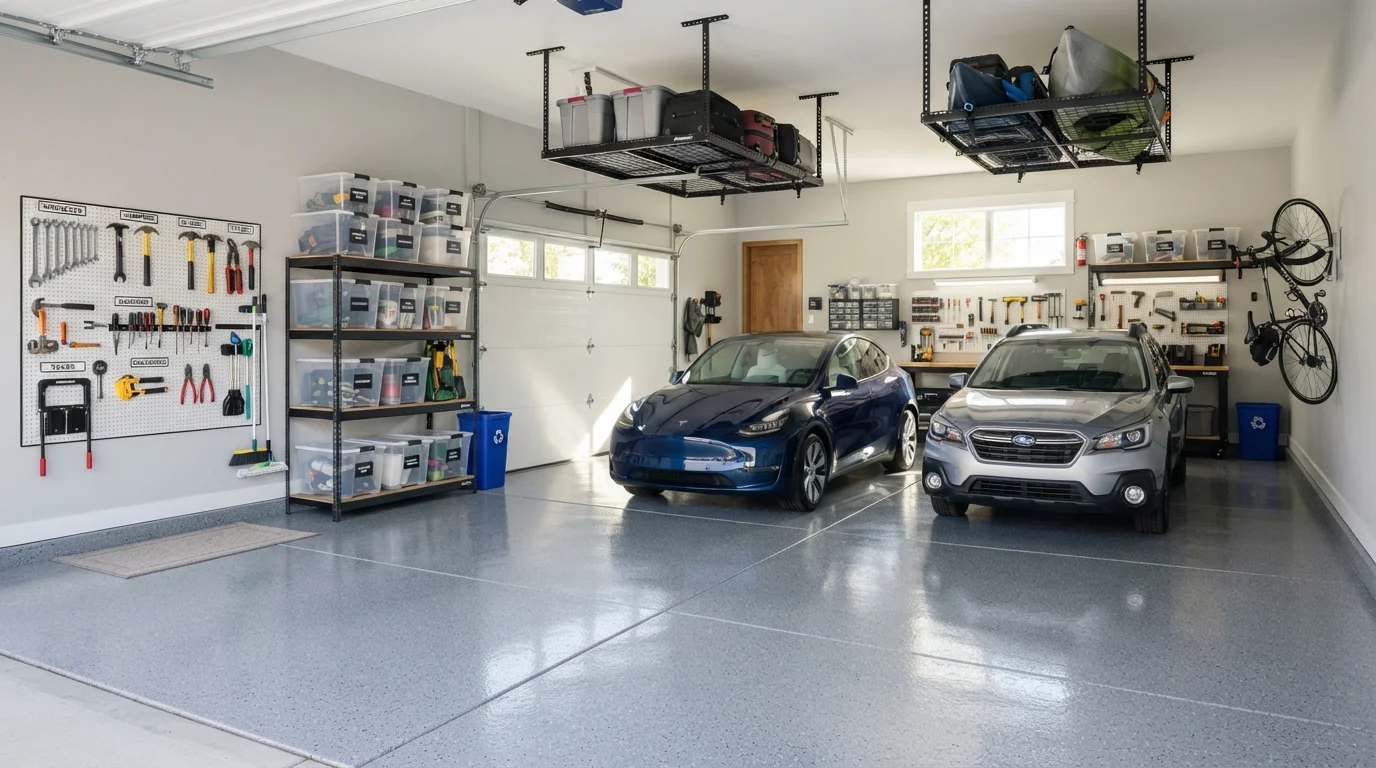
Most garage floor plans feel cramped because storage stays concentrated at ground level. Wall-mounted systems - slotted panels, pegboards, track rails with interchangeable hooks and baskets - let you store tools and gear at eye level or above, completely freeing the floor beneath them. Overhead ceiling racks are well-suited to large, lightweight, infrequently accessed items: roof cargo carriers, holiday bins, folding tables, and camping gear.
When mounting any wall or ceiling storage, always anchor into studs or use hardware rated for the load you're hanging. Overloaded drywall anchors are a common and avoidable failure point. For a deeper look at making vertical space work throughout the home, see Vertical Space Is the Most Underused Resource in Small Homes.
Install track-rail systems rather than fixed pegboards when possible - they allow you to reposition hooks and baskets as your tool collection or workflow changes without re-drilling.
Tool needs evolve over time, and rigid systems often become poorly suited to their contents within a couple of years, leading to workarounds that undermine the whole layout.
Group garden chemicals, automotive fluids, and other hazardous materials in a single locked or latched cabinet, clearly labeled, away from heat sources and out of reach of children.
Centralizing hazardous items in one location simplifies emergency access for adults while reducing accidental exposure risk, and aligns with general fire-safety guidance for attached garages.
Freestanding wire or metal shelving units work well along back walls for bins and boxes. Opt for adjustable-shelf units so the system can evolve as your storage needs change - fixed shelves often become obstacles within a year or two.
Flooring and the Ground Level
The garage floor takes more abuse than almost any surface in the home: vehicle fluids, lawn equipment, moisture from rain-wet cars, and heavy foot traffic. Addressing the floor is both a practical and organizational step. A clean, sealed, or coated floor is easier to sweep, makes spills visible, and signals clear zone boundaries.
Interlocking floor tiles and rolled epoxy-based coatings are the two most common DIY-friendly options. Tiles are modular and forgiving for uneven slabs; coatings bond to the concrete and provide a seamless finish but require thorough surface prep. For any coating that involves chemical application or slab grinding, follow manufacturer safety guidance and ensure adequate ventilation. Work requiring significant slab repair or drainage correction should involve a licensed contractor.
At ground level, minimize what actually sits on the floor. Bikes should hang vertically from wall hooks or a freestanding bike rack. Trash and recycling bins can be corralled in a corner zone. Seasonal items like snow blowers and lawn mowers should have a defined parking spot that keeps the car bay accessible.
Labeling and Maintaining the System
A garage organization project that lacks clear labeling will revert to chaos within a season. Labels work because they remove the decision of where something goes - both when you're putting it away and when another household member is looking for it. Apply labels to all bins, drawers, and shelving sections. For a garage, durable materials - laminated paper, vinyl labels, or label-maker tape - hold up better than paper stickers exposed to temperature swings and humidity.
Our in-depth labeling systems guide covers placement rules, material choices, and when labeling genuinely improves day-to-day retrieval. For households doing a broader audit beyond the garage, the room-by-room organization checklist provides a structured walkthrough of the whole home.
Finally, schedule a 30-minute garage review at the start of each season. This is when categories shift - snow shovels come forward in autumn, garden tools move to the front in spring - and when clutter begins to reaccumulate if left unchecked. A brief regular review costs far less time than a full reorganization every few years.
This article provides general home organization guidance for informational purposes. For structural, electrical, or significant construction work, consult a licensed contractor and verify local building codes and permit requirements before proceeding.
The content provided on our blog site traverses numerous categories, offering readers valuable and practical information. Readers can use the editorial team’s research and data to gain more insights into their topics of interest. However, they are requested not to treat the articles as conclusive. The website team cannot be held responsible for differences in data or inaccuracies found across other platforms. Please also note that the site might also miss out on various schemes and offers available that the readers may find more beneficial than the ones we cover.