

What Compaction Actually Does to Your Soil
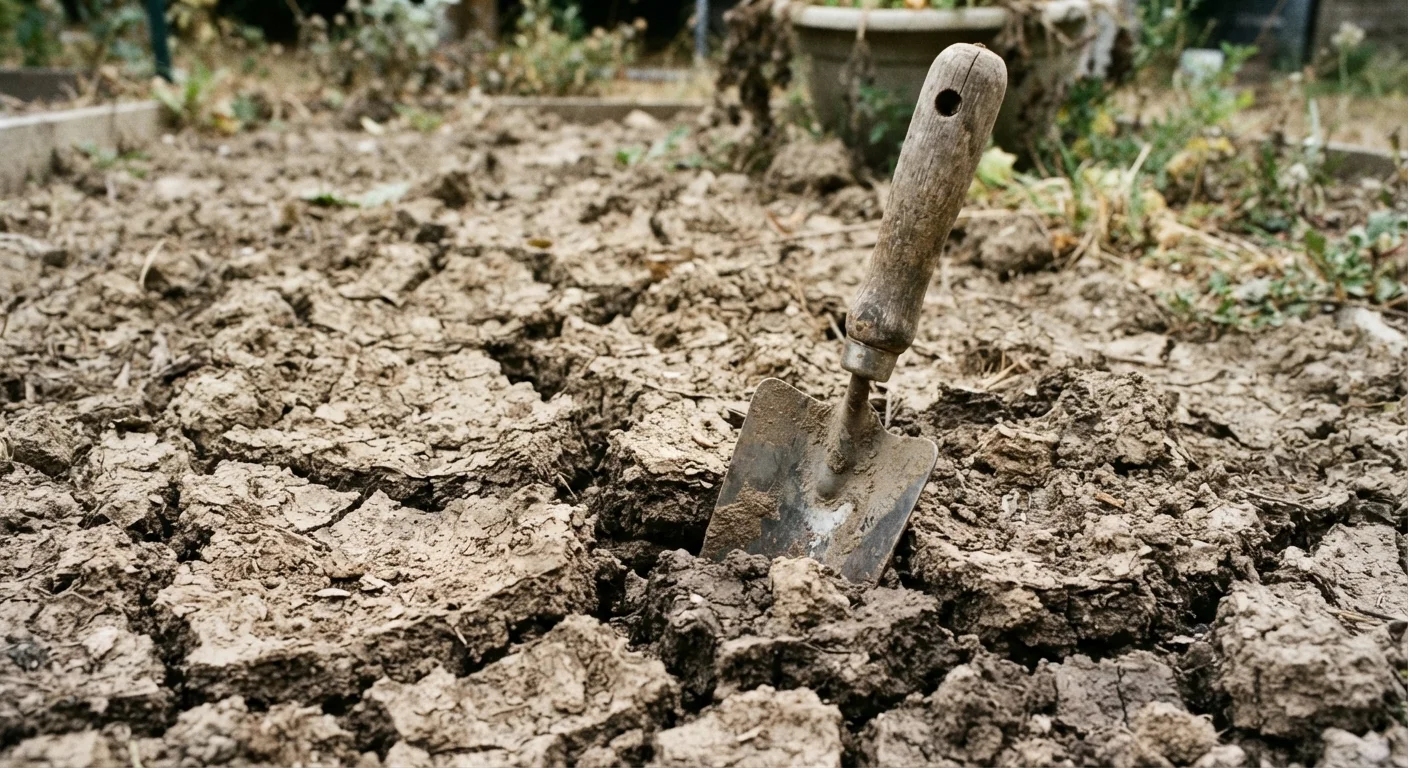
Healthy garden soil is roughly half solid material and half open pore space - channels that hold air and water and give roots room to grow. When soil compacts, those pores collapse. Water puddles on the surface or runs off instead of soaking in, oxygen becomes scarce, and even robust plant roots struggle to penetrate more than a few inches.
The problem is self-reinforcing: compacted soil drains poorly, stays wet longer after rain, and becomes even harder when it eventually dries. The concrete-like crust many gardeners notice in summer is often the end result of months of compressive pressure combined with repeated wetting and drying cycles.
Soil structure is also closely tied to its chemistry. If you suspect compaction is only part of what's holding your plants back, our article on soil pH and plant health explains how nutrient availability interacts with physical soil conditions.
~50%
Ideal pore space in healthy garden soil
Soil scientists generally cite roughly half of healthy soil volume as pore space - filled with air and water - which compaction significantly reduces.
2-3 inches
Annual compost layer shown to improve structure
University cooperative extension programs commonly recommend adding 2-3 inches of compost yearly to gradually rehabilitate compacted beds.
Common Mistakes That Cause and Worsen Compaction
Most soil compaction is unintentional - it builds slowly through everyday gardening habits. Understanding which practices cause damage is the first step toward reversing it.
Walking repeatedly across the same garden areas without defined pathways.
Why it happens: Gardeners naturally take the shortest route to reach plants, concentrating foot traffic in narrow corridors over many seasons.
Tilling soil every season in the belief that it loosens and improves structure.
Why it happens: Annual tilling feels productive, and it does briefly improve texture - but repeated tillage breaks down soil aggregates and destroys the fungal networks that naturally hold soil open.
Watering lightly and frequently, which keeps moisture near the surface and draws roots upward.
Why it happens: Short watering cycles feel like attentive care, but they encourage shallow root systems that struggle to penetrate compacted lower soil layers.
Skipping organic matter additions and relying on mechanical aeration alone.
Why it happens: Aerating gives immediate, visible results that feel satisfying, so gardeners often stop there rather than following up with amendment.
Working soil immediately after rain or irrigation.
Why it happens: Soft, moist soil seems easier to dig, but saturated conditions mean soil particles pack together tightly when disturbed.
If you find yourself starting over with heavily compacted ground, raised beds vs. in-ground planting is worth reading - raised beds give you complete control over soil quality from the start.
Never Till Wet Soil
Working soil while it is saturated smears soil particles together and destroys the pore spaces that roots, water, and air depend on. This damage can persist for an entire growing season. Wait until soil passes the squeeze test: a handful should crumble when released, not hold a slick ribbon shape.
Restoring Soil Structure: Practical Steps That Last
Recovery from compaction is achievable in most home gardens, though it takes at least one full growing season to see meaningful improvement. The most durable approach combines physical loosening with ongoing organic matter additions.
- Loosen first: Use a broadfork or core aerator for lawns, or a digging fork for beds. Work to a depth of 8-12 inches where possible. Avoid power tillers, which improve the surface while worsening structure deeper down.
- Amend immediately: Top-dress with a 1-2 inch layer of finished compost after loosening. For severely depleted soil, incorporating aged compost to full fork depth gives faster results.
- Protect with mulch: A 2-3 inch mulch layer shields improved soil from rain compaction and foot traffic. Our guide to mulching garden beds correctly covers material choices and common application errors.
- Redirect traffic: Install permanent paths immediately. All the amendment work will undo itself within one season if foot traffic continues across planting areas.
Some gardening advice suggests adding gypite (calcium sulfate) or sharp sand to break up clay soils. These approaches can help in specific situations but are not universally effective and can backfire if not matched to your soil type. A basic soil test - available through many county extension offices - can clarify what your soil actually needs before you invest in amendments. Avoid treatments based on appearance alone.
Deep Mechanical Aeration Has Limits
Core aerators and broadforks are useful tools, but they address symptoms rather than causes. If compaction stems from ongoing foot traffic or drainage problems, aeration alone will need to be repeated every season. Solve the underlying issue - redirect pathways, improve drainage - to make improvements last.
The content provided on our blog site traverses numerous categories, offering readers valuable and practical information. Readers can use the editorial team’s research and data to gain more insights into their topics of interest. However, they are requested not to treat the articles as conclusive. The website team cannot be held responsible for differences in data or inaccuracies found across other platforms. Please also note that the site might also miss out on various schemes and offers available that the readers may find more beneficial than the ones we cover.