

Why Pet Food Labels Matter
Walking the pet food aisle can feel overwhelming. Claims like "natural," "premium," and "grain-free" crowd the front of every bag, but the real nutritional story lives on the back or side panel. Learning to read that panel puts you in control of one of the most consistent health decisions you make for your pet every day.
In the United States, pet food labels are regulated by both the AAFCO and individual state feed control officials. This means labels follow a defined structure — once you know what each section does, you can read any label quickly. For a broader look at how food format affects nutrition, see our guide on dry food, wet food, and raw diets.
What you will need
Step-by-Step: Decoding Each Label Section
Pet food labels contain several distinct sections, each serving a different purpose. Work through them in order below to build a complete picture of what you're feeding your pet.
Read the Product Name for Ingredient Clues
AAFCO naming rules tie the product name directly to ingredient content. A food called "Salmon Cat Food" must contain at least 95% salmon (excluding water for processing). "Salmon Dinner" or "Salmon Entrée" requires only 25%. These thresholds are set by regulation, so the product name is a reliable first filter.
Scan the Ingredient List — but Understand Its Limits
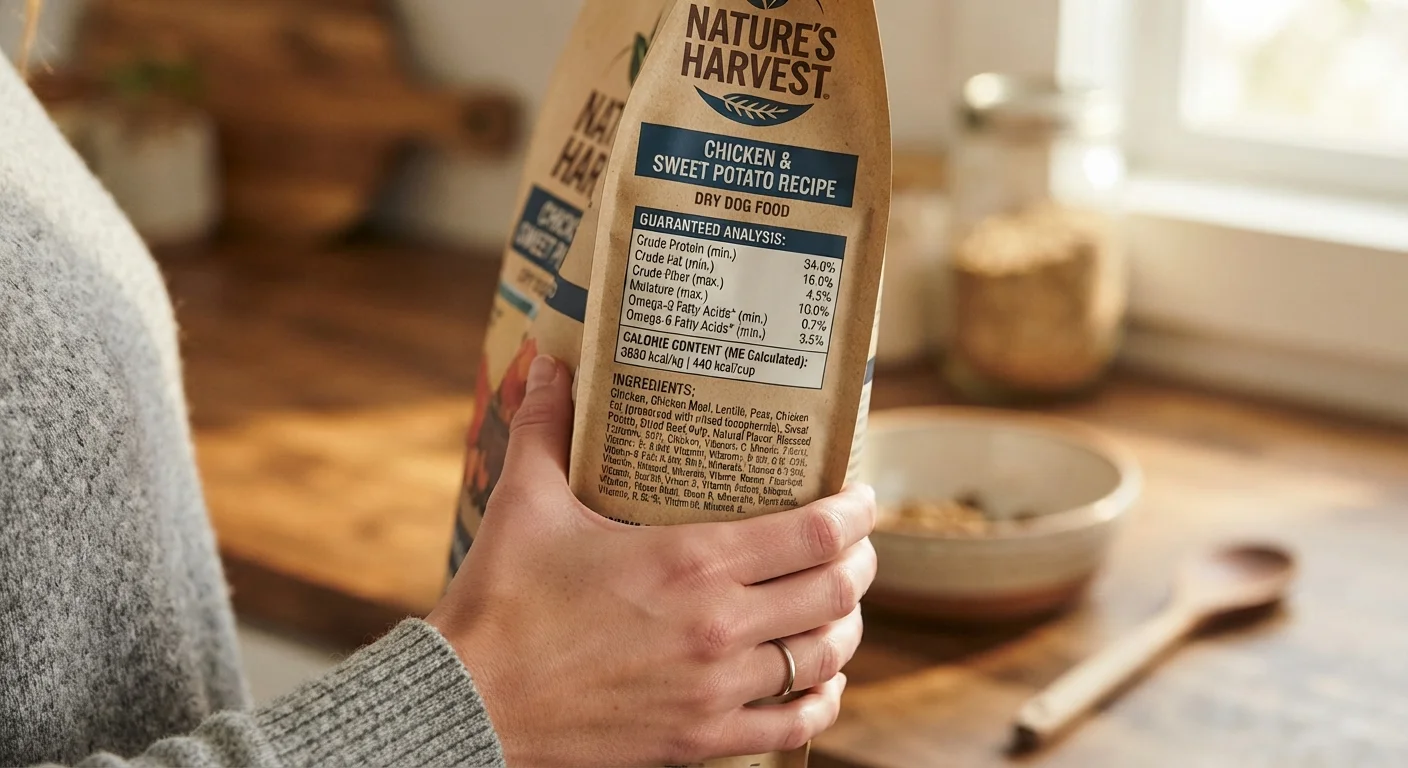
Ingredients are listed in descending order by pre-cooking weight, including their moisture. This means a whole meat like chicken may appear first simply because it's heavy with water, even if a dry ingredient like corn meal is present in greater dry-matter quantity. Look for a named protein source (e.g., "chicken," "salmon," not just "poultry") near the top. Also note that manufacturers sometimes split a single ingredient into multiple forms — for example, listing "ground corn," "corn gluten meal," and "corn flour" separately — which effectively lowers each entry's ranking while keeping total corn content high. This practice is sometimes called ingredient splitting.
Locate and Interpret the Guaranteed Analysis
The guaranteed analysis panel lists minimum percentages of crude protein and crude fat, and maximum percentages of crude fiber and moisture. These are not exact values — they're regulatory floors and ceilings. A food with a minimum 26% crude protein guarantee may contain significantly more. Use this panel for general comparisons and to ensure a food meets the baseline needs of your pet's species and life stage, but don't treat the numbers as precise nutritional facts.
Find the AAFCO Nutritional Adequacy Statement
This is one of the most important lines on any pet food label. It will say something like: "[Product name] is formulated to meet the nutritional levels established by the AAFCO [Dog/Cat] Food Nutrient Profiles for [life stage]." Or it may indicate the diet was validated through feeding trials. This statement tells you whether the food is complete and balanced for a specific life stage — adult maintenance, growth (puppies/kittens), all life stages, or senior. If a label says "for supplemental or intermittent feeding only," that food is not nutritionally complete on its own.
Use Feeding Guidelines as a Starting Point Only
Feeding guidelines appear as a chart or range based on your pet's body weight. These are calculated for an average, moderately active animal of that weight. Factors like spay/neuter status, age, activity level, and breed can all shift the appropriate amount up or down — sometimes by 20–30%. Start within the recommended range, then monitor your pet's body condition over several weeks and adjust accordingly. Your veterinarian can help you establish a more tailored target.
When to Bring the Label to Your Vet
If your pet has a diagnosed health condition — kidney disease, allergies, or obesity, for example — bring the food label (or a photo of it) to your next vet visit. Your veterinarian can review the guaranteed analysis and ingredient list in the context of your pet's specific needs and confirm whether the food is appropriate. General label literacy is a useful skill, but it doesn't replace individualized professional guidance.
Common Label Confusion and What to Do About It
Even after reading the label carefully, a few persistent misunderstandings trip up many owners.
"With" vs. named ingredient claims
A label that says "Chicken Flavor" may contain very little actual chicken. Under AAFCO rules, a product named "Chicken Dog Food" must be at least 95% chicken (excluding water), while "With Chicken" only requires 3%. The word placement matters more than it seems.
Comparing wet and dry food fairly
Wet food contains 70–80% moisture; dry kibble typically contains around 10%. Comparing guaranteed analysis percentages directly is misleading. To do a true apples-to-apples comparison, convert both to a dry matter basis by dividing the nutrient percentage by the percentage of dry matter (100 minus moisture %). This is especially useful when your pet is eating a mix of formats. Feeding guidelines are another common source of confusion — labels list ranges for average, moderately active pets. If your pet is less active, older, or prone to weight gain, those amounts may be too high. Our article on why so many pets are overweight explains how to recognize when portions may be off. For a deeper look at popular nutrition beliefs that don't always hold up, see common myths about pet nutrition.
Front-of-Pack Claims Are Not Regulated the Same Way
Terms like "natural," "holistic," and "human-grade" have limited or no standardized definitions under current AAFCO guidelines. They are marketing language, not nutritional certifications. Always turn the package over and evaluate the ingredient list, guaranteed analysis, and AAFCO statement before drawing conclusions about a food's quality.
The content provided on our blog site traverses numerous categories, offering readers valuable and practical information. Readers can use the editorial team’s research and data to gain more insights into their topics of interest. However, they are requested not to treat the articles as conclusive. The website team cannot be held responsible for differences in data or inaccuracies found across other platforms. Please also note that the site might also miss out on various schemes and offers available that the readers may find more beneficial than the ones we cover.