

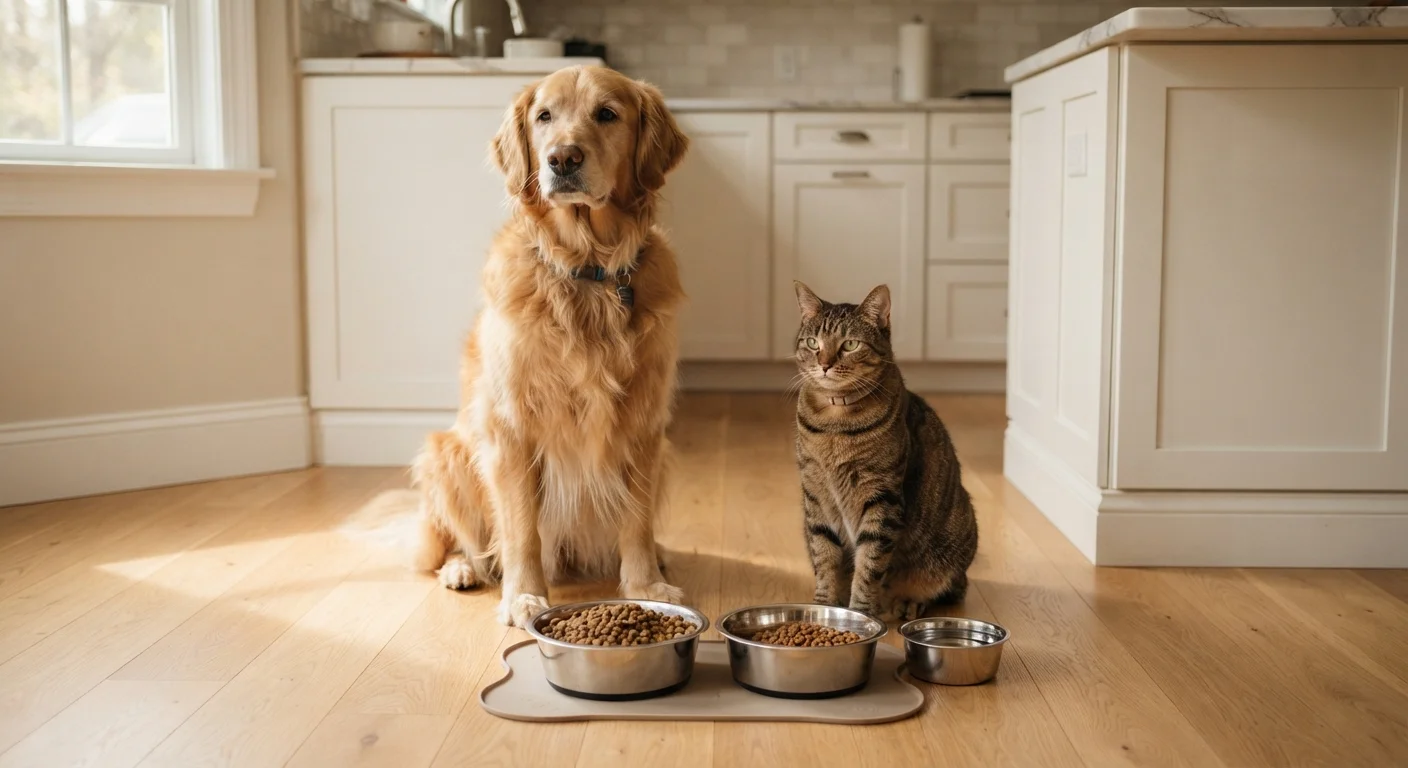
Why Pet Nutrition Myths Are So Persistent
Pet owners are motivated by genuine care, which is exactly why nutrition myths spread so effectively. Compelling marketing language, social media communities, and a reasonable skepticism toward processed food all make alternative feeding philosophies feel intuitively right. But intuition about human diets doesn't always map onto what companion animals actually need biologically.
Veterinary nutritionists consistently identify a handful of beliefs that, despite being widely held, contradict current evidence. Understanding where these ideas come from — and what the research actually shows — helps owners make more confident, grounded decisions for their animals. For a broader look at how food myths affect households generally, see how nutrition myths persist in human health.
Myth
Grain-free diets are healthier for dogs because grains are unnatural fillers.
Fact
Grains are digestible energy sources for dogs and are not inherently harmful. The FDA has been investigating a possible link between grain-free diets and dilated cardiomyopathy (DCM), a serious heart condition.
The grain-free trend borrowed heavily from human low-carb logic, but dogs are not obligate carnivores. Decades of domestication have equipped them with genes that support starch digestion. Grains like rice, oats, and barley provide readily available energy and are well tolerated by most dogs.
More critically, the U.S. Food and Drug Administration launched an investigation into a potential association between legume-heavy, grain-free formulas and DCM in dogs. The science is still evolving, but veterinary cardiologists have flagged enough cases to recommend caution. Talk to your vet before switching your dog to a grain-free formula, particularly if your dog is a breed with known cardiac predispositions.
Myth
Raw diets are more natural and therefore safer and more nutritious than commercial food.
Fact
Raw diets carry documented risks of bacterial contamination — for pets and the people who handle the food — and are frequently nutritionally incomplete without careful formulation.
The appeal of raw feeding rests on the idea that ancestral diets were raw, so raw must be optimal. In practice, both the American Veterinary Medical Association (AVMA) and the American Animal Hospital Association have expressed concern about raw meat diets due to the risk of Salmonella, Listeria, E. coli, and other pathogens that can sicken pets and their owners.
Nutritional imbalance is also a consistent finding in studies of home-prepared raw diets — many are deficient in calcium, phosphorus, or key vitamins. If raw feeding is something you want to explore, a veterinary nutritionist can help design a formulation that minimizes risk and meets established nutrient standards.
Myth
Cats can thrive on a primarily plant-based diet if it's balanced correctly.
Fact
Cats are obligate carnivores with specific nutrient requirements — including taurine, arachidonic acid, and preformed vitamin A — that cannot be adequately met by plant ingredients alone.
Unlike dogs, cats lack certain metabolic pathways that would allow them to synthesize essential nutrients from plant precursors. Taurine deficiency in cats causes retinal degeneration and dilated cardiomyopathy. Arachidonic acid, found only in animal tissue, is essential for inflammatory and reproductive function in cats.
Feeding cats a diet that relies heavily on plant proteins — even with supplementation — introduces unnecessary nutritional risk. A cat's dietary needs are fundamentally different from a human's or even a dog's. For a wider look at common cat care misconceptions, see beliefs about cats that vets frequently correct.
Myth
Homemade pet food is always better than commercial food because you control the ingredients.
Fact
Homemade diets are frequently nutritionally incomplete. Without precise formulation by a veterinary nutritionist, they often lack essential vitamins, minerals, or correct macronutrient ratios.
The appeal of home cooking is understandable — owners know exactly what goes in the bowl. But studies of owner-prepared pet food recipes, including those sourced online or from popular books, have consistently found significant nutrient gaps. Deficiencies in calcium, zinc, vitamin D, and omega-3 fatty acids are especially common.
This doesn't mean homemade food is impossible to do well, but it requires professional guidance. AAFCO (the Association of American Feed Control Officials) sets nutrient profiles that commercial foods must meet — replicating that rigor at home without expert help is genuinely difficult. If you're committed to home cooking, a consultation with a board-certified veterinary nutritionist is the responsible starting point.
Myth
Protein content on a pet food label tells you everything about the food's quality.
Fact
Crude protein percentage on a label reflects total protein quantity, not its digestibility, amino acid profile, or source — all of which matter more for your pet's health.
The guaranteed analysis panel on pet food packaging lists crude protein as a percentage, but this figure is a legal minimum based on laboratory measurement, not a direct indicator of how bioavailable that protein is to your pet. Plant-based proteins can inflate the crude percentage without delivering the amino acid profile a dog or cat requires.
Digestibility, ingredient quality, and overall formulation matter considerably more than a single percentage. Learning to read the full label — including the ingredient list and whether the product carries an AAFCO nutritional adequacy statement — gives a much more complete picture. Our guide to reading pet food nutrition labels walks through each section in plain language.
Putting Evidence Into Practice
Correcting a nutrition myth isn't the end of the conversation — it's the starting point for a better one with your veterinarian. Diet decisions should account for your pet's species, age, weight, health conditions, and activity level. No single feeding philosophy fits every animal.
Don't Switch Diets Without Veterinary Input
Abrupt dietary changes can cause gastrointestinal upset in both cats and dogs. More importantly, switching to a grain-free, raw, or homemade diet without professional guidance can introduce nutritional deficiencies or food-safety risks that aren't immediately obvious. Even well-intentioned changes can affect your pet's health over time — a point explored in more depth in common home care mistakes between vet visits. Always consult your veterinarian before making significant changes to what your pet eats.
If you're curious about the practical differences between kibble, canned food, and raw options, our comparison of dry, wet, and raw diets explains the key trade-offs. Learning to read pet food labels is equally valuable — the guide to decoding pet food nutrition labels breaks down what ingredient lists and guaranteed analysis panels actually mean. And if weight management is a concern, understanding the everyday habits that drive pet weight gain is worth a read before adjusting portions or treats.
Sound nutrition decisions start with credible information. When in doubt, a board-certified veterinary nutritionist can provide guidance tailored to your pet's specific needs — something no generalized diet trend can reliably do.
This article is for general informational purposes only and does not constitute veterinary or medical advice. Consult a licensed veterinarian before making changes to your pet's diet or care routine.
The content provided on our blog site traverses numerous categories, offering readers valuable and practical information. Readers can use the editorial team’s research and data to gain more insights into their topics of interest. However, they are requested not to treat the articles as conclusive. The website team cannot be held responsible for differences in data or inaccuracies found across other platforms. Please also note that the site might also miss out on various schemes and offers available that the readers may find more beneficial than the ones we cover.