

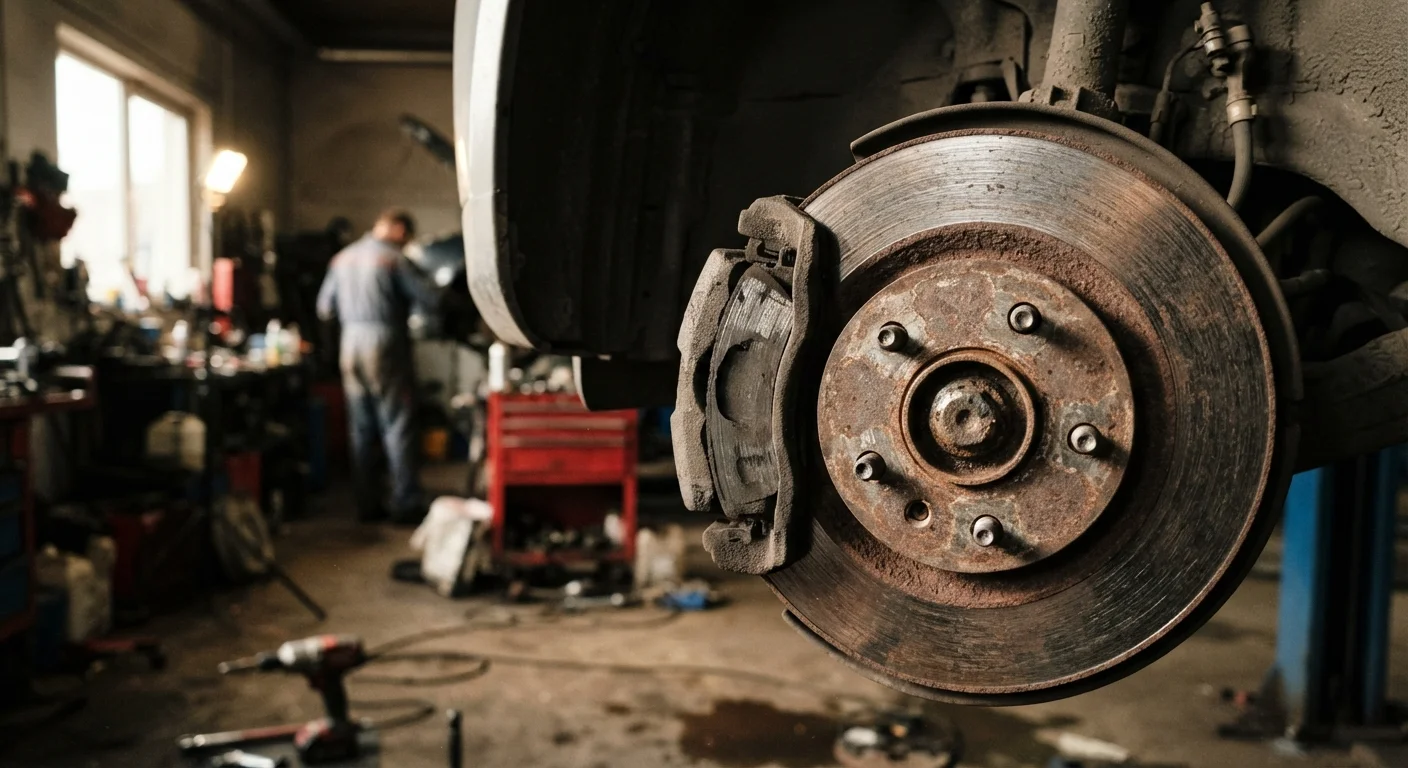
Why Brakes Don't Get the Attention They Deserve
Brakes are the single most important safety system on your vehicle, yet they're among the most neglected. The reason is predictable: brake wear is gradual. Unlike a flat tire or a dead battery, deteriorating brakes rarely announce themselves with a dramatic failure. Instead, they send subtle signals - a faint squeal here, slightly more pedal travel there - that are easy to rationalize away. By the time most drivers seek help, the repair is more involved and more expensive than it needed to be.
Understanding the common mistakes that allow brake problems to escalate is the first step toward keeping your vehicle - and the people around you - safer. A quick pre-trip safety check can also help you catch developing issues before they worsen.
Dismissing brake sounds as 'probably nothing' and continuing to drive.
Why it happens: Squealing can occur briefly on cold or damp mornings and then disappear, which trains drivers to treat all brake noise as temporary and harmless.
Waiting until the brake warning light illuminates before taking action.
Why it happens: Many drivers rely entirely on dashboard indicators, assuming the car will alert them before anything goes seriously wrong.
Skipping scheduled brake inspections because the brakes 'feel fine.'
Why it happens: Subjective feel is an unreliable gauge of brake health. Drivers adapt to gradual changes in pedal response without noticing the shift.
Replacing only brake pads while ignoring rotor condition.
Why it happens: New pads are the obvious fix when brakes feel worn, and some drivers or budget shops skip rotor measurement to keep costs down in the short term.
Ignoring a soft or spongy brake pedal.
Why it happens: A pedal that requires more travel to engage braking can feel like a minor inconvenience, and drivers sometimes assume it's normal variation.
What Your Brakes Are Actually Telling You
Every unusual sound or sensation from your brakes carries meaning. A high-pitched squeal when you apply the brakes often indicates that wear indicators - small metal tabs built into the brake pads - are contacting the rotor. That noise is by design: it's an audible alert that pads are getting thin.
Grinding, by contrast, typically means the pad material has worn through entirely, and metal is contacting metal. At that stage, rotors are likely being scored, turning a pad replacement into a more costly pad-and-rotor job. A vehicle that pulls to one side during braking can signal uneven pad wear, a stuck caliper, or a brake hose issue. A pulsating or vibrating pedal often points to warped rotors.
22%
Vehicles with inadequate brakes on U.S. roads
The Federal Highway Administration has estimated that a significant share of vehicles inspected in roadside checks show brake-related deficiencies.
~$300-$800
Typical cost increase when rotors are also damaged
Industry repair data consistently shows that delaying pad replacement until rotors are scored roughly doubles the average brake service cost.
None of these symptoms should be monitored passively. If any of them appear, the appropriate response is to have the brakes inspected by a qualified mechanic promptly - not at the next oil change, and certainly not when you get around to it. See why brake work is one area where professional assessment matters.
Using Your Owner's Manual as a Starting Point
One of the most overlooked brake maintenance tools is already in your glove compartment. Your vehicle's owner's manual contains the manufacturer's recommended inspection and service intervals for brake components. These are developed with your specific drivetrain, weight, and braking system in mind - and they're more reliable than generic advice.
Understanding how to read and use your maintenance schedule takes the guesswork out of timing. Drivers who follow manufacturer intervals consistently tend to catch brake wear before it creates compounding damage. Those who skip or delay inspections often face higher repair bills and, more importantly, reduced confidence in their vehicle's ability to stop safely.
Brake Work Is Safety-Critical - Get It Inspected
Unlike many maintenance tasks, brake system issues directly affect your ability to stop in an emergency. If you notice persistent noise, pedal changes, pulling, or vibration, do not defer the inspection. A qualified mechanic is the appropriate person to assess and service brake components - this is not an area where guesswork is acceptable.
It's also worth knowing that driving habits affect brake wear significantly. Frequent highway driving with gradual deceleration is easier on brake components than stop-and-go urban traffic. If your driving profile is demanding, inspections may be warranted more often than the manual's standard interval suggests. Certain driving habits can accelerate brake wear in ways many drivers don't realize.
The content provided on our blog site traverses numerous categories, offering readers valuable and practical information. Readers can use the editorial team’s research and data to gain more insights into their topics of interest. However, they are requested not to treat the articles as conclusive. The website team cannot be held responsible for differences in data or inaccuracies found across other platforms. Please also note that the site might also miss out on various schemes and offers available that the readers may find more beneficial than the ones we cover.