

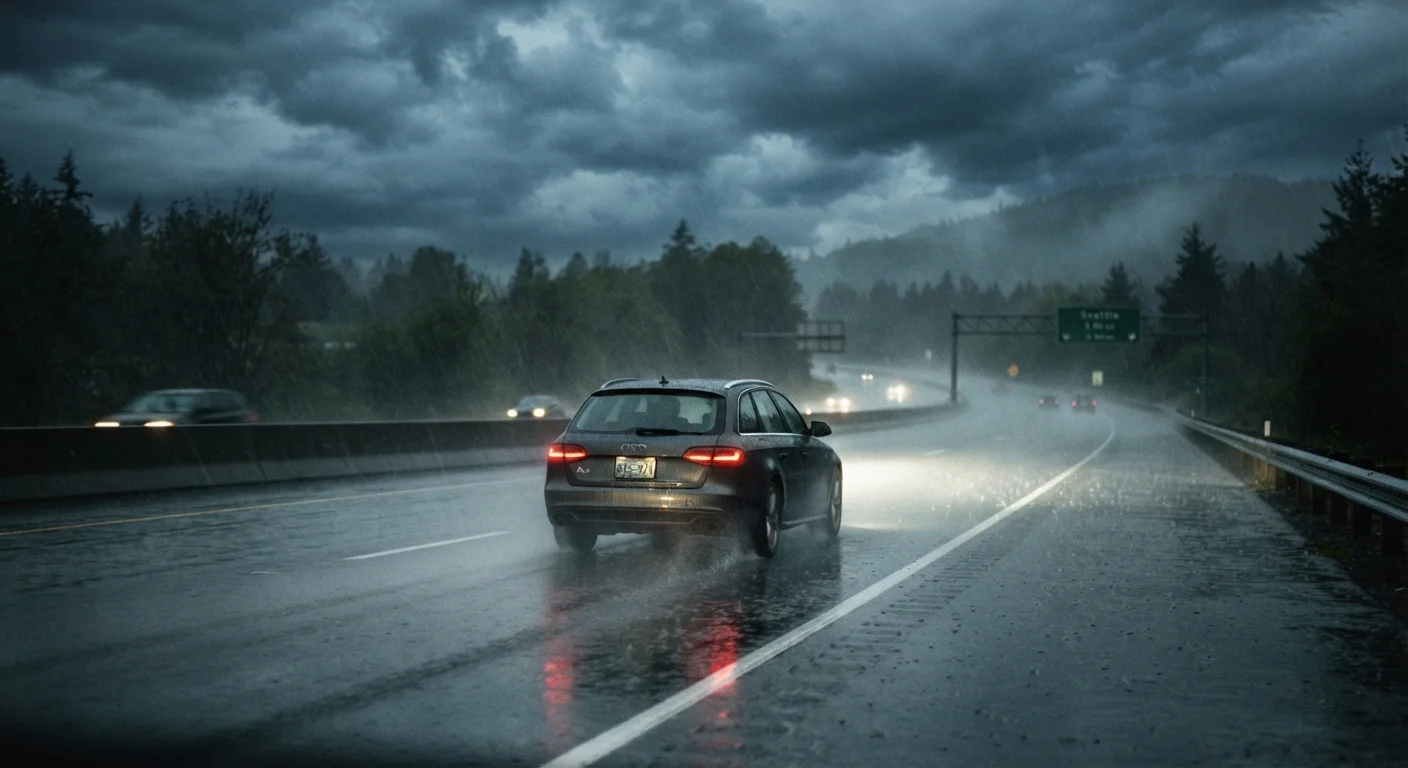
Why Weather Demands More Than Just Slowing Down
Rain, snow, and fog each attack a different aspect of safe driving. Rain reduces tire grip and can cause hydroplaning. Snow and ice extend stopping distances far beyond what most drivers expect. Fog collapses the visual buffer you rely on to make decisions. Treating all three the same - just slowing down a little - leaves you underequipped for the specific hazard you are facing.
Experienced drivers adjust their entire approach: lighting, following distance, speed management, and how smoothly they operate the controls. The good news is that each adjustment is learnable, and none requires special equipment beyond a well-maintained vehicle. For context on how skilled drivers read the full road environment, see how experienced drivers scan the road. Weather driving is also meaningfully different from nighttime driving - compare the demands with night driving safety to build a complete picture.
What you will need
Tread depth gauge
Measures remaining tire tread to confirm tires can channel water and grip in snow.
Ice scraper and snow brush
Clears snow and ice from all windows, mirrors, and lights before driving in winter conditions.
Emergency kit (flares, reflective triangles, blanket)
Provides visibility and warmth if you need to stop in severe weather.
Step-by-Step: Adapting to Rain, Snow, and Fog
The steps below address the full sequence - from before you leave the driveway through each type of adverse condition. Work through them in order; preparation steps matter as much as in-the-moment responses.
Check Conditions Before You Leave
A quick review of weather radar and road condition reports for your route takes under two minutes and can save you from being caught off guard. State departments of transportation often publish real-time road condition maps - bookmark yours. Combine this habit with the pre-trip safety check to build a consistent departure routine.
Prepare your vehicle before any weather-affected trip
Vehicle condition is your first safety layer. Confirm your wipers clear the windshield cleanly without streaking. Check that headlights, taillights, and turn signals work. Inspect tire pressure - cold air lowers pressure, reducing traction - and look for tread wear. Review your car maintenance basics if you are unsure what to check. For a structured walkthrough, use the pre-trip safety checklist before heading out.
Adjust your speed before you need to, not during
Slowing down is most effective when done early and gradually. In rain, reduce your speed to allow tires more time to channel water. In snow or ice, aim for speeds that give you full control through every corner and incline - this may be well below the posted limit. Speed limits reflect ideal conditions; they are not a prescription for adverse weather. Your target speed should be one where a sudden stop feels manageable.
Increase following distance for each condition
The standard 2-3 second following distance is built for dry pavement. In rain, extend to at least 4 seconds. In snow or ice, 8-10 seconds is a reasonable target. Measure by picking a fixed object - a sign or bridge - and counting from when the car ahead passes it until you do. A longer gap means more stopping room and more time to react. This single adjustment prevents a large share of rear-end crashes in bad weather.
Use lights correctly for each condition
In rain and snow, turn on headlights so other drivers can see you - many states require this by law when wipers are in use. In fog, use low-beam headlights or dedicated fog lights. High beams scatter off water droplets and actually reduce how far you can see while blinding oncoming drivers. If visibility is severely limited, a slow speed with low beams and hazard lights on is generally your safest configuration. Learn your vehicle's lighting controls before you are under pressure to use them.
Recognize and respond to hydroplaning
Hydroplaning occurs when a layer of water builds up between your tires and the road faster than the tires can displace it - you effectively lose contact with the pavement. You may feel the steering go light or hear a change in engine sound. Do not brake hard or steer sharply. Ease your foot off the accelerator, keep the wheel pointed straight, and let the vehicle slow naturally until you feel traction return. If you need to brake, apply light, steady pressure - not a sudden stomp.
Navigate snow and ice with smooth, deliberate inputs
On snow or ice, every action - accelerating, braking, turning - should be slow and deliberate. Abrupt inputs break traction. Accelerate gently from stops to avoid wheelspin. Brake early and progressively. When cornering, enter the turn slower than feels necessary; a vehicle understeering wide on ice cannot be corrected by turning harder. If your vehicle has modern stability control, understand that it helps but does not eliminate physics. All-wheel drive improves acceleration traction but does not improve braking on ice. [warning_callout]
Drive in fog with patience and discipline
Fog compresses your visible stopping distance dramatically. Slow down until you can stop within the distance you can see - this is a formal road safety principle sometimes called driving within your headlight range. Avoid using high beams. Stay toward the right side of your lane to use road markings as a guide. In dense fog, open your window slightly so you can hear oncoming traffic. If conditions become untenable, follow the guidance in the important callout above and exit the road safely. [important_callout]
After the Drive: What to Check
Once you arrive safely, a brief post-trip check can catch issues before your next trip. If you drove through heavy rain, inspect for any signs of water intrusion around doors or windows. After snow driving, clear ice and packed snow from wheel wells, which can affect steering. Check for any warning lights that appeared during the drive - cold temperatures and wet conditions can surface electrical or sensor issues. Review fluid under your car if you notice any drips after parking in cold weather, since many fluids behave differently at low temperatures.
For new or less confident drivers, highway driving guidance provides a useful parallel framework for managing high-speed environments - skills that become especially relevant when highway weather conditions deteriorate.
The content provided on our blog site traverses numerous categories, offering readers valuable and practical information. Readers can use the editorial team’s research and data to gain more insights into their topics of interest. However, they are requested not to treat the articles as conclusive. The website team cannot be held responsible for differences in data or inaccuracies found across other platforms. Please also note that the site might also miss out on various schemes and offers available that the readers may find more beneficial than the ones we cover.