

Start here
What Is the Graduated Driver Licensing System?
Next
The Three Stages Explained
Then
Why the Restrictions Exist
Apply it
Tips for Making the Most of Each Stage
What Is the Graduated Driver Licensing System?
The graduated driver licensing (GDL) system is a staged approach to earning full driving privileges. Rather than handing a new driver unrestricted access after a single written and road test, GDL laws require teens to build experience gradually - starting in low-risk conditions before moving to more complex driving situations.
Every US state has adopted some version of a GDL program. The structure is backed by decades of road safety research and is recognized by organizations such as the National Highway Traffic Safety Administration (NHTSA) as one of the most effective tools for reducing crash fatalities among young, inexperienced drivers.
For families navigating this process, understanding the system helps set realistic expectations - and helps teens use the time productively. This article is part of our broader resource, Safe Driving From Start to License, which covers everything new drivers need to know from day one.
The Three Stages Explained
While specific rules differ by state, GDL programs in the US follow a broadly consistent three-stage structure:
Stage 1: Learner's Permit
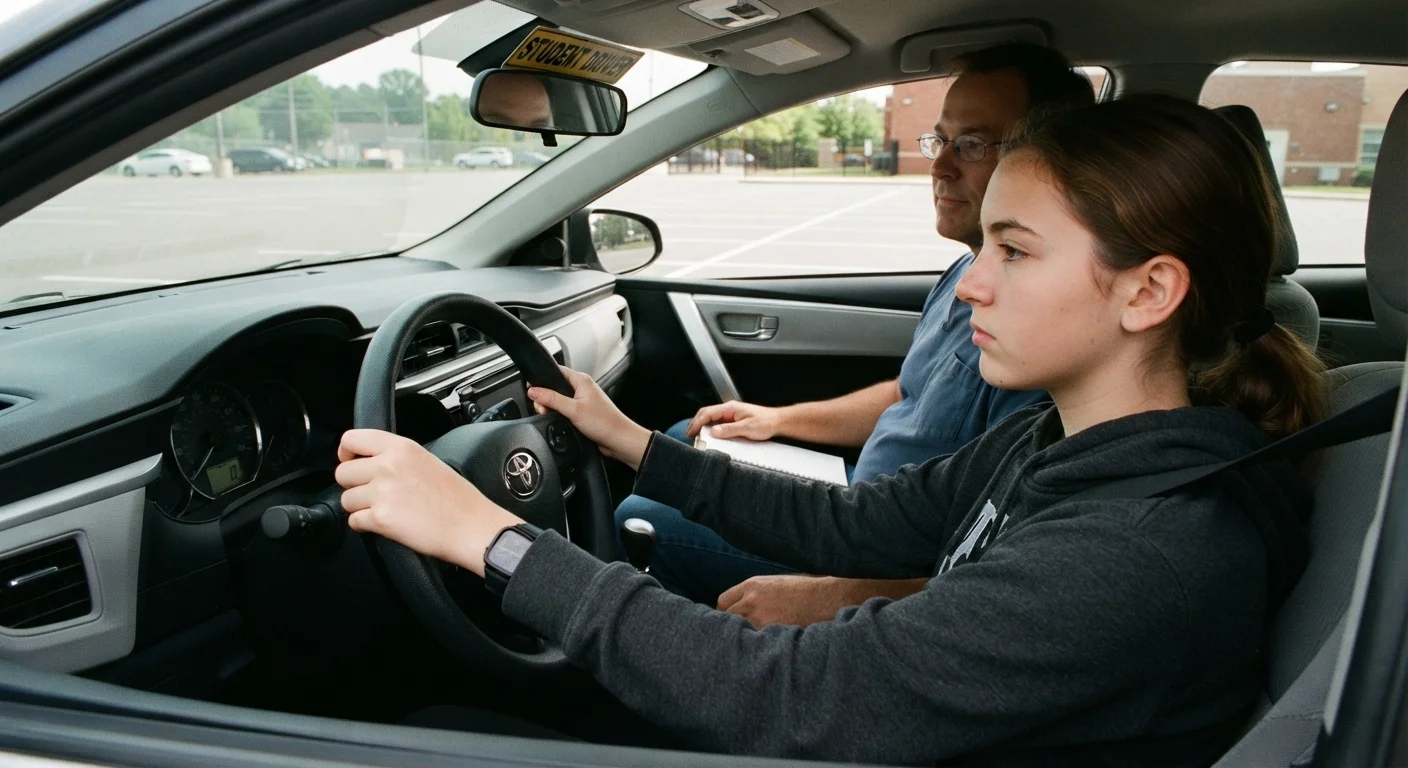
A teen who passes a knowledge test is issued a learner's permit, allowing supervised driving practice. At this stage, a licensed adult must be present in the vehicle at all times. Most states require a minimum number of supervised practice hours - commonly 40 to 60 hours - before advancing. Some states mandate that a portion of those hours be completed at night.
Stage 2: Restricted (Intermediate) License
After holding the permit for a set period and meeting the practice-hour requirement, a teen can take a road skills test. Passing earns a restricted license - independent driving is now permitted, but with limits. The most common restrictions include nighttime driving curfews (often no unsupervised driving between 11 p.m. and 5 a.m.) and limits on the number of teenage passengers allowed in the vehicle.
Stage 3: Full Unrestricted License
Once a driver holds the intermediate license for the required period without violations and meets any age minimums, they become eligible for a standard, unrestricted license. In most states, this occurs at or after age 17 or 18.
Why the Restrictions Exist
The rules in a GDL program are not arbitrary. Each restriction targets a documented risk factor for teen drivers.
- Nighttime curfews: Crash risk for teens is disproportionately higher at night due to reduced visibility, fatigue, and different traffic patterns. Our guide on night driving safety explains exactly what changes after dark.
- Passenger limits: Research has consistently found that teen crash risk rises with each additional teenage passenger in the vehicle. The distraction and social pressure introduced by peers is a contributing factor in many crashes.
- No phone use: Most states prohibit all handheld device use for novice drivers, often more strictly than for adults, reflecting the higher cognitive demands on inexperienced drivers.
- Supervised practice requirements: Requiring substantial practice hours ensures teens experience a wider range of conditions - wet roads, heavy traffic, merging situations - before driving independently. Skills like scanning the road ahead take real repetition to develop.
State Rules Vary - Don't Assume
GDL requirements differ significantly from state to state. Permit ages, required practice hours, curfew times, passenger limits, and the age at which restrictions lift are all set at the state level. Always verify the current rules with your state's Department of Motor Vehicles before making any decisions based on general guidance.
Tips for Making the Most of Each Stage
The GDL timeline is an opportunity to build genuine competence, not just log hours until the restrictions lift.
During the Permit Stage
Vary your practice deliberately. Don't limit sessions to familiar neighborhood streets - practice parking lots, busy intersections, highway on-ramps, and night driving where your state allows supervised nighttime hours. For a structured look at highway skills, see our guide on highway driving for new drivers.
During the Restricted Stage
Treat restrictions as the floor, not the ceiling. A teen who avoids late-night driving and peer-packed cars isn't just complying with the law - they're reducing real crash risk. Focus on refining fundamentals like maintaining proper following distance; our piece on safe following distance covers this in depth.
Approaching the Full License
A full license is a milestone, not a finish line. The habits and awareness built during the GDL process carry directly into long-term safe driving. Parents and teens alike should treat the transition as the beginning of a driving life, not the end of driver education.
Keep a Driving Log from Day One
Many states require documentation of supervised practice hours, and some ask parents to certify the total. Start a simple driving log the first time your teen gets behind the wheel - note the date, duration, conditions, and type of driving practiced. This record also helps identify gaps in experience, such as too few hours in wet weather or on highways.
Frequently Asked Questions
In most US states, teens can apply for a learner's permit at age 15 or 16, though a few states allow it as early as 14 in limited circumstances. The exact age depends on your state's laws. Always check your state's Department of Motor Vehicles for current requirements.
The full process typically takes one to two years before a teen qualifies for an unrestricted license. Most states require a minimum holding period at each stage, plus a set number of supervised driving hours. Exact timelines vary by state.
Some states carve out limited exceptions - for example, allowing a teen to drive alone late at night in a documented emergency. However, these exceptions are narrow and state-specific. Teens should not assume restrictions are flexible without verifying their state's rules.
Consequences vary by state but commonly include fines, a delay in advancing to the next licensing stage, or suspension of the current permit or license. Violations can also affect a teen's insurance rates.
In most states, a licensed adult - typically age 21 or older - must be present in the front passenger seat during the learner's permit stage. Some states specifically require a parent or guardian. Check your state's exact requirement.
When a teen moves to a new state, they generally must meet that state's GDL requirements, which may differ from where they started. Some states give credit for time spent in an equivalent stage elsewhere. Contact the new state's DMV to clarify.
The content provided on our blog site traverses numerous categories, offering readers valuable and practical information. Readers can use the editorial team’s research and data to gain more insights into their topics of interest. However, they are requested not to treat the articles as conclusive. The website team cannot be held responsible for differences in data or inaccuracies found across other platforms. Please also note that the site might also miss out on various schemes and offers available that the readers may find more beneficial than the ones we cover.