

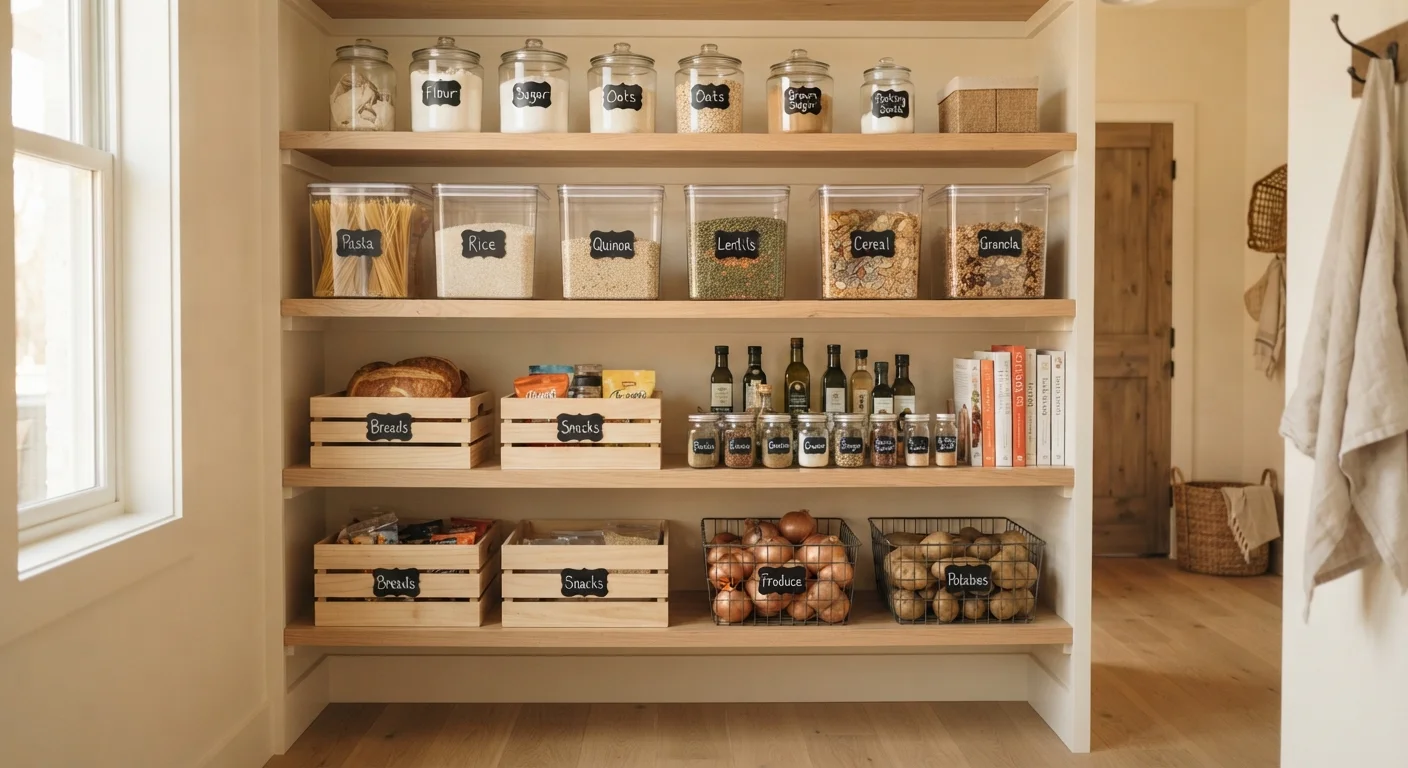
Why Labeling Systems Actually Matter
Labels do one job: they make the contents of a container or space readable without opening, moving, or guessing. That single function eliminates a surprising amount of daily friction - the rummaged drawer, the mystery bin in the garage, the spice jar that turns out to be cream of tartar.
Effective labeling also distributes organizational knowledge across an entire household. When only one person knows where things live, the system depends on that person being present. Clear, consistent labels break that dependency. A well-labeled pantry, for example, means any family member can restock groceries in the right place without asking.
The key word is consistent. A single drawer labeled in a hurry with masking tape and a marker achieves little. A labeling system - a repeatable method applied across storage zones - is what produces lasting results. See our guide to why organization efforts fail for context on why systems outlast one-time tidying sessions.
| Most versatile label type | Printed label-maker tape (laminated) |
| Best for rotating pantry contents | Chalkboard or dry-erase adhesive labels |
| Best for fabric bins and baskets | Tied cardstock tag labels |
| Optimal label placement | Front face, at eye level or lid-top for stacked bins |
| Highest-return labeling zones | Pantry, garage, paper files, seasonal clothing storage |
| Naming best practice | Use category-level names in your household's own vocabulary |
Label Types and When to Use Each
Choosing the right label format for a space is as important as labeling at all. The wrong material in the wrong environment peels, smears, or becomes unreadable within weeks.
Label system
A consistent, repeatable method for marking the contents, category, or owner of a storage container or zone. A system applies the same format, placement logic, and naming conventions across multiple areas.
Zone labeling
Marking an entire shelf section or storage area by category rather than labeling each individual container. It provides context before a user opens or moves anything.
Laminated tape
A label-maker tape format that coats the printed text in a clear protective layer. It resists moisture, fading, and abrasion better than standard tape - preferred for bathrooms, basements, and other humid environments.
Color coding
Assigning a specific color to a category, person, or type of item as a visual organization cue. Most effective when paired with text labels rather than used as the sole identifier.
Category label
A label that names a broad group of items (e.g., "Batteries," "Baking Supplies") rather than a specific product. Category labels are more durable over time because the bin can absorb new items within the same group.
Handwritten Labels
Best for: temporary storage, frequently rotated contents (pantry staples, freezer items), personal workspaces. A fine-tip permanent marker on masking tape or a painter's tape strip is fast, free, and easy to swap. It is not weather-resistant and looks inconsistent at scale.
Printed Labels (Label Maker)
Best for: permanent or semi-permanent storage - bookshelves, office files, garage bins, laundry room. Label makers produce uniform text that is readable from a distance and more durable than handwriting. Laminated tape versions hold up in humidity-prone areas like basements or under sinks.
Chalkboard and Dry-Erase Labels
Best for: pantries, kitchens, and any space where contents rotate regularly. Adhesive chalkboard or dry-erase labels let you rewrite without residue. They photograph well, which matters if you prefer a visually cohesive look, though the aesthetic value should be secondary to readability.
Icon or Color-Coded Labels
Best for: households with young children, shared spaces with multiple users, or categories that are genuinely visual (craft supplies by color, sports gear by person). Color coding works best as a supplement to text, not a replacement - colors fade, and not all household members see them the same way.
Tag Labels
Best for: fabric bins, baskets, and containers where adhesive won't bond cleanly. A simple cardstock tag tied through a handle stays put and is easy to swap when contents change. Works well in closets and under-bed storage.
Practical Placement and Naming Rules
Even the right label format fails when it is placed where nobody looks, or named in a way only one person understands. These rules hold up across most household storage situations:
- Label the front face at eye level (or lid-top for stacked bins). Labels on the back, side, or bottom of a container rarely get read consistently.
- Name the category, not the specific item. A bin labeled Batteries can absorb any battery type; a bin labeled AA Batteries requires a separate bin the moment you buy AAAs. Broad category labels extend the life of the system.
- Use the language your household uses. If everyone calls it the "junk drawer stuff," label it something close to that - not a tidy euphemism that confuses people. Shared vocabulary makes labels functional rather than decorative.
- Avoid abbreviations unless they're universal in your household. What one person reads as "H&G" might mean hardware, garden, or something else to a different family member.
- Label the zone, not just the container. In a garage or pantry, a shelf-level label (e.g., "Baking" or "Auto Supplies") guides users before they even pull a bin. This is especially useful in deeper shelving where the front-facing bin may not represent everything behind it.
For room-specific strategies, a room-by-room organization checklist can help identify which zones need the most labeling attention.
Labeling Works Best After Sorting
Applying labels before you have finalized what goes where leads to frequent rewrites and a system that erodes quickly. Sort and group contents first, then commit to labels once categories are stable. This is especially true for high-turnover areas like pantries or garages undergoing a first-time reorganization. Revisiting and updating labels every six to twelve months keeps the system accurate as household needs shift.
Where Labels Make the Biggest Difference
Not every space benefits equally from labeling. The highest-return areas are those with frequent use by multiple people, or where contents are invisible without opening a container.
Pantry and kitchen dry storage - Opaque bins, stacked cans, and decanted ingredients all become navigable with clear labels. This is where chalkboard labels and printed tape both excel.
Garage and utility storage - Heavy bins with lids are almost impossible to navigate without exterior labels. A well-organized garage relies on consistent labeling to maintain zone integrity over time, especially for households that share the space across many categories (tools, sports gear, seasonal décor).
Clothing and linen storage - Labeled bins for off-season clothes or extra bedding prevent the wrong items from being pulled during a rushed morning. See seasonal clothing storage methods for how labeling integrates with rotation systems.
Paper filing systems - File folders without labels are nearly useless. Paper clutter requires a labeling logic of its own - broad hanging folders with specific interior folders works for most households.
Lower-priority zones: open shelving where contents are always visible, single-use dedicated spaces (a hook for one specific item), or areas only one person ever accesses.
The content provided on our blog site traverses numerous categories, offering readers valuable and practical information. Readers can use the editorial team’s research and data to gain more insights into their topics of interest. However, they are requested not to treat the articles as conclusive. The website team cannot be held responsible for differences in data or inaccuracies found across other platforms. Please also note that the site might also miss out on various schemes and offers available that the readers may find more beneficial than the ones we cover.