

Start here
Why Your Travel Style Matters
Next
The Main Traveler Types (And What They Need)
Then
Matching Your Type to a Destination
Apply it
When Your Household Has Mixed Interests
Take action
Next Steps: Turning Your Travel Style Into a Real Trip
Why Your Travel Style Matters
Choosing a destination based on what looked good on social media — or what a friend loved — is one of the most common reasons trips fall flat. A stunning beach town can bore an adventure hiker. A packed urban itinerary can exhaust a family craving quiet. The mismatch between what a place offers and what a traveler actually wants is almost always avoidable.
Your travel style is a shortcut. It captures your instinctive preferences about pace, activity, environment, and experience — and when you understand it clearly, destination research becomes far more focused. Instead of scrolling through hundreds of options, you're eliminating the wrong ones quickly and zeroing in on places built for exactly what you love.
This guide walks through the most common traveler types, what each one genuinely needs from a destination, and how to use that knowledge to make smarter choices. For a deeper look at how geography shapes the practical experience of any destination, see how geography shapes a destination's weather, crowds, and cost.
Travel style
Your instinctive preferences about what kind of activities, environments, and pace make a trip feel worthwhile to you.
Destination fit
How well a location's core offerings match a traveler's specific interests, pace preference, and logistical needs.
Anchor interest
The single travel priority you'd choose over all others when trade-offs arise — the non-negotiable element of a good trip for you.
Shoulder season
The period just before or after a destination's peak travel season, often offering fewer crowds and similar conditions at potentially different price points.
Permit system
A reservation or quota system used by some parks and outdoor destinations to manage the number of visitors in sensitive or high-demand areas.
The Main Traveler Types (And What They Need)
Most travelers cluster around a handful of dominant styles. Read through these and notice which one — or combination — describes your strongest pull.
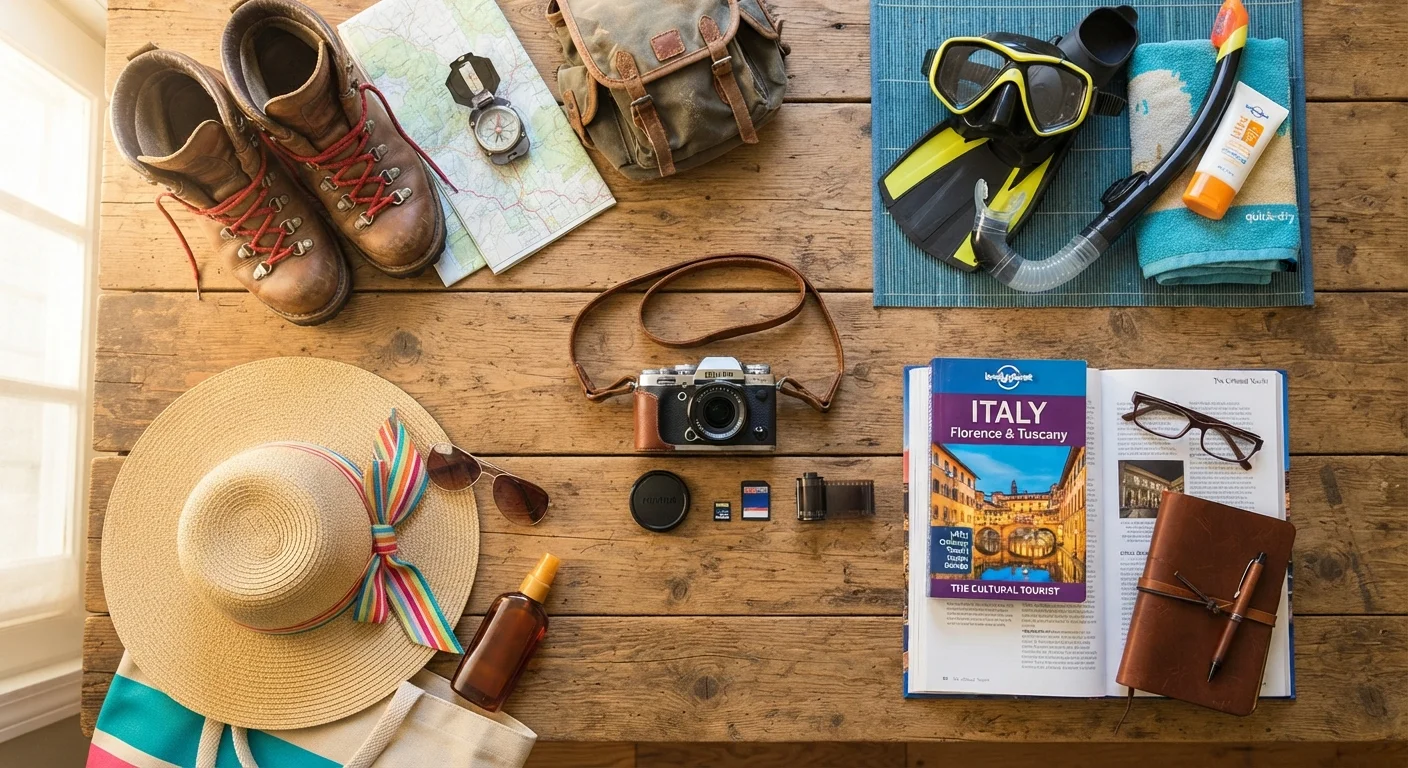
The Outdoor Adventurer
Happiest with a trail underfoot or a kayak paddle in hand. Prioritizes physical challenge, natural landscapes, and wildlife. Needs destinations with infrastructure for active pursuits — reliable trail maps, permit systems, gear rentals, and safety resources. Think national parks, mountain regions, and coastal wilderness areas.
The Culture & History Enthusiast
Drawn to museums, UNESCO sites, local food scenes, and neighborhood walks that reveal how people actually live. Prefers cities or towns with deep historical layers. Needs walkable areas, solid public transit, and a calendar of events or exhibits worth planning around.
The Rest & Recharge Traveler
Wants sun, slow mornings, and minimal agenda. Not laziness — this is intentional decompression. Needs comfortable accommodations, reliable weather, and a destination where doing very little never feels like wasted time. Beach destinations, lake towns, and wine country are natural fits.
The Food & Culinary Traveler
Structures the day around meals, markets, and local ingredients. May combine well with culture travel but is distinctly motivated by what's on the plate. Needs destinations with thriving local food culture — not just tourist-facing restaurants, but markets, farm visits, and neighborhood spots.
The Family-Focused Traveler
Optimizing for everyone's comfort, safety, and engagement across different ages. Needs destinations with child-appropriate attractions, manageable logistics, and flexibility for unpredictable days. May overlap with any of the above types but places accessibility and variety above depth in any one area.
Matching Your Type to a Destination
Knowing your type only helps when you apply it systematically. Here's a practical framework:
- List your top two or three priorities — not the destination, but what you want to do and feel on the trip.
- Filter by environment — does your type thrive in cities, coastlines, mountains, or rural areas? This alone eliminates large categories quickly. The comparison in city breaks vs. rural retreats is a useful next step.
- Factor in logistics — travel time from home, entry requirements if international, and seasonal conditions. An outdoor adventure destination in its off-season may offer entirely different (and potentially less suitable) experiences.
- Check the depth of fit — a destination might have one great museum and call itself a culture destination, or have one beach and market itself as a resort. Look for places where your interest is a core identity of the location, not an add-on.
Rank, Don't Just List
When identifying your travel priorities, force-rank them rather than simply listing them. If you had to choose between one great hike and one great museum on the same afternoon, which would you pick? That choice reveals your anchor interest more reliably than any quiz.
For US-based households unsure whether to stay domestic or travel internationally, weighing domestic vs. international travel covers the practical trade-offs across budget, logistics, and experience.
When Your Household Has Mixed Interests
Traveling with a partner, family, or group almost always means reconciling more than one travel style. The most effective approach isn't finding a compromise destination — it's finding a destination with enough variety that each person can anchor to something meaningful.
A national park region near a small city, for example, can satisfy an outdoor adventurer and a culture enthusiast simultaneously without either person feeling shortchanged. A coastal town with a historic district serves beach lovers and history buffs on the same trip. The key is looking for destinations that have genuine depth in at least two categories, not surface-level offerings across five.
For more on aligning different preferences within a group, how to choose a destination that works for everyone offers practical strategies for mixed-interest households.
It's also worth considering whether a slower, more immersive approach might help — slow travel can reduce conflict over pace by giving everyone more time in one place rather than rushing through multiple stops.
Next Steps: Turning Your Travel Style Into a Real Trip
Once you've identified your type and shortlisted a destination that genuinely fits, the research work begins in earnest. Two things matter most at this stage: timing and verification.
Timing is underestimated by most first-time trip planners. The same destination can be dramatically different depending on season — not just in weather, but in crowd size, pricing, and which experiences are actually available. Planning around peak season explains how to factor this into your decision.
Verification means checking the details that matter for your specific type. Adventure travelers need to confirm permit availability and trail conditions. International travelers need to review entry requirements and any current travel advisories through official government sources. Family travelers should confirm age-appropriate access and accommodation flexibility. For a structured way to do this, the destination research checklist covers the essential bases before you commit.
Finally, don't overlook what's already close to home. Underexplored US regions may offer exactly the experience your travel type craves — without the passport, international fees, or long-haul flight.
Frequently Asked Questions
Think about your last trip or vacation you genuinely enjoyed — what part energized you most? Whether it was hiking, exploring museums, relaxing on a beach, or trying local food, that enthusiasm is a reliable signal. If you're new to travel, consider what you enjoy in daily life and look for destinations that amplify that.
Absolutely — most people are a mix. The goal isn't to fit a single label but to rank your priorities. If you'd choose a cultural afternoon over a beach nap every time, culture is your anchor. Use that hierarchy to filter destinations rather than trying to find one that does everything equally well.
Look for destinations with variety built in — national parks near small cities, coastal towns with historic districts, or resort areas adjacent to hiking trails. Splitting days between different activities can satisfy multiple preferences without compromise feeling like sacrifice.
Yes, meaningfully. Adventure travelers often spend more on gear, guides, and permits. Culture seekers spend on entry fees, tours, and accommodation in city centers. Beach-focused travelers may find costs vary widely depending on whether they choose a domestic coast or an international resort destination.
Some types are very well served domestically — outdoor adventurers, for instance, have extraordinary options across the US. Culture and food travelers may find international destinations offer more variety for a similar investment, but domestic options are increasingly strong. Ultimately it depends on your specific interests and logistics.
Timing matters enormously and varies by type. Wildlife watchers must align with animal behavior cycles; beach lovers should avoid hurricane seasons; ski travelers depend on snowfall windows. Researching seasonal conditions for your specific interest is just as important as picking the destination itself.
The content provided on our blog site traverses numerous categories, offering readers valuable and practical information. Readers can use the editorial team’s research and data to gain more insights into their topics of interest. However, they are requested not to treat the articles as conclusive. The website team cannot be held responsible for differences in data or inaccuracies found across other platforms. Please also note that the site might also miss out on various schemes and offers available that the readers may find more beneficial than the ones we cover.